
Compression vs. Lifestyle Activewear: Which Category Fits Your Brand's Next Growth Phase?
Compression vs. Lifestyle Activewear: Which Category Fits Your Brand's Next Growth Phase?
Every activewear brand eventually reaches the same fork in the road. One path leads to a compression and gym wear line: high-support leggings, structured sports bras, technical training tops built to hold shape under load. The other leads to a lifestyle activewear line: everyday leggings, soft-touch hoodies, streetwear-led sets designed to be worn to the studio and then through the rest of the day.
Both are activewear. Both can be produced by the same factory. But they demand different fabric systems, different fit development, different certification emphasis, and they generate different repeat-purchase behaviour. Committing your next growth phase to the wrong one locks capital into the wrong inventory, the wrong sample cycle, and the wrong supplier relationship.
This article compares the two categories from a brand owner's procurement perspective — fabric inputs, performance features, compliance requirements, sampling behaviour and reorder dynamics — so the decision can be made on evidence rather than on what competitors happen to be posting this season.
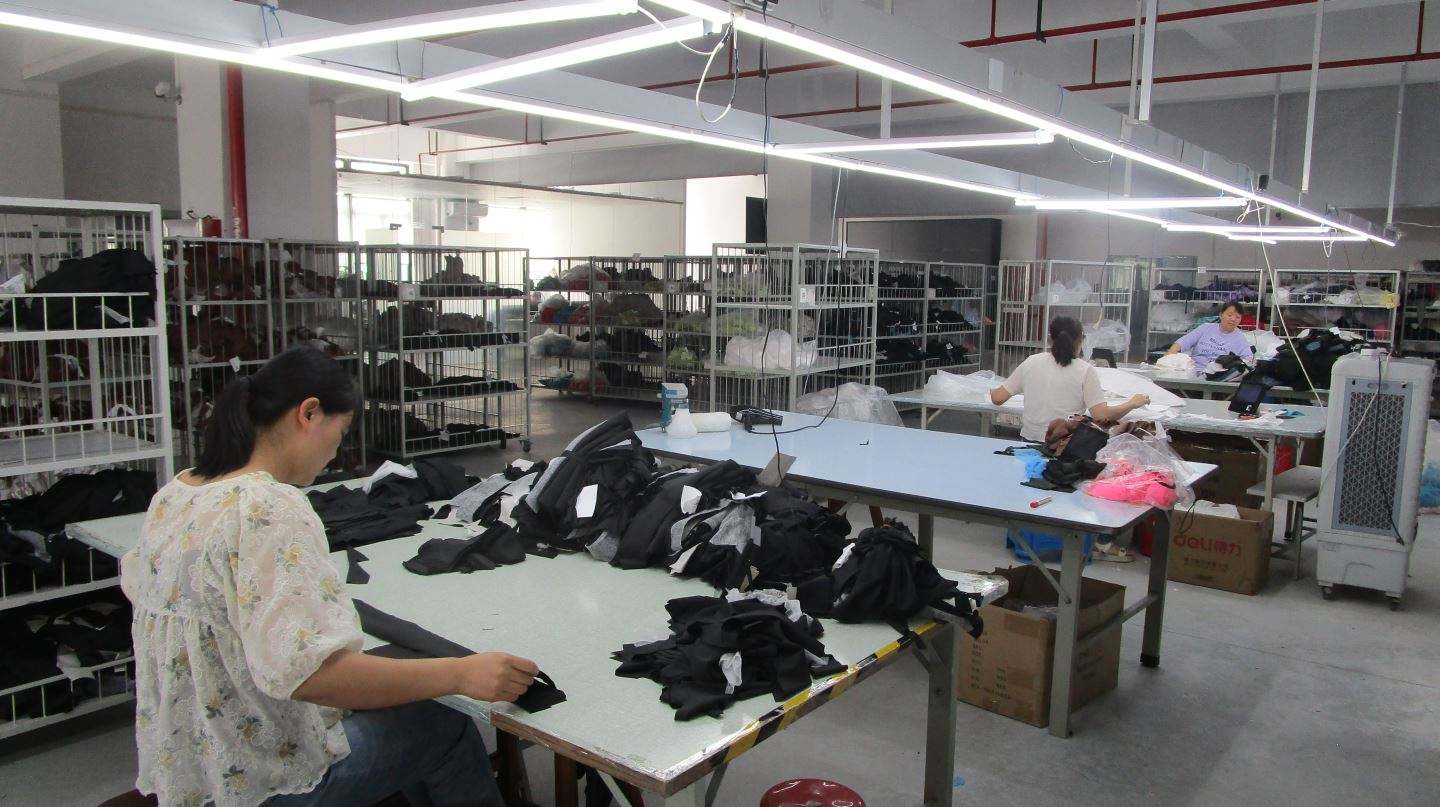
What the Category Decision Actually Is
The compression-versus-lifestyle choice is not a style debate. It is a decision about which consumer problem your brand is solving, and therefore which manufacturing capabilities your supply chain must be built around.
In a compression or gym wear line, the buying reason is performance. A consumer purchasing a high-support sports bra or a pair of compression leggings is asking whether the garment will hold, support and recover during movement. The garment has to deliver a specific sensation under load, and repeat purchase depends on that sensation being consistent from the first unit to the tenth reorder.
In a lifestyle activewear line, the buying reason is wearability. The consumer is asking whether the garment is comfortable, flattering and appropriate across several parts of their day. Repeat purchase depends on fabric hand-feel, drape, colour story, and whether the fit still feels right six months later.
Those two buying reasons pull the entire supply chain in different directions — fibre selection, knit structure, finishing, fit tolerance and colour strategy all change. The good news is that they do not require two different manufacturing partners. They require a partner who understands why the brief is different.
Where the Activewear Market Sits in 2026
Category sizing matters here, because the two lines sit inside different growth curves.
- The global activewear market was valued at USD 440.4 billion in 2025 and is projected to reach USD 920.0 billion by 2033, according to Grand View Research.
- The sustainable athleisure segment specifically is growing at a CAGR of 12.5% (2025–2030), reaching a projected USD 176.0 billion by 2030, also per Grand View Research.
- Premium activewear brands such as Alo Yoga and Vuori primarily utilise manufacturing hubs in Vietnam and China for technical cut-and-sew operations.
- Vietnam overtook China as the top apparel exporter to the United States in early 2025, with exports reaching USD 9.5 billion between January and July, according to US Office of Textiles and Apparel data reported by fDi Intelligence.
- DTC challenger brand Vuori reached a USD 5.5 billion valuation in 2024, with sales growth outpacing the broader market.
The practical read for a brand owner: the performance and lifestyle categories are both expanding, but the sustainable lifestyle side is compounding faster than the market average. That does not automatically make it the right choice — it means the category decision should be made against your brand's existing customer base, not against the headline growth rate alone.
The Compression / Gym Category: A Technical Product
Fabric foundation
Compression and gym products are engineered around elastic recovery. The two most common fabric families are:
- Nylon-spandex — chosen for high stretch, smooth surface and reliable recovery, making it the standard base for high-support sports bras, compression leggings and fitted training tops.
- Recycled polyester — used for moisture management, durability and to support recycled-content claims, typically blended with spandex for stretch.
These fabrics are usually knitted at a higher gauge so the finished garment stays opaque under stretch and delivers the sculpting feel consumers associate with the category.
Performance features buyers expect
- Four-way stretch — elongation and recovery in both directions, so the garment moves with the body without bagging out.
- Moisture-wicking — the fabric moves sweat away from the skin rather than holding it.
- Compression and support — engineered tension that stabilises muscle groups during high-impact movement.
- Shape retention — the garment returns to its original dimensions after repeated wear and wash cycles.
Where this category wins
Compression and gym wear earns its price point through demonstrable function. It supports premium positioning, sustains high repeat rates among committed athletes, and creates a technical moat: once a consumer finds a compression legging that fits her body and her sport, switching costs are real.
Where the constraints sit
Compression is far less forgiving. Because the garment sits close to the body, small fit deviations become visible fit failures, and size tolerance has to be tight. Returns rates in fitted performance categories are structurally more sensitive, and performance claims need to be supportable — which is exactly where certification and testing discipline start to matter.
The Lifestyle Activewear Category: A Comfort and Wearability Product
Fabric foundation
Lifestyle activewear is built around feel and breathability rather than recovery tension. The typical fabric families are:
- Organic cotton — chosen for softness, breathability and a natural hand-feel, often blended with a small amount of elastane for movement.
- Bamboo blend — appreciated for a smooth, cool touch and moisture behaviour in everyday wear.
- Recycled fibres — increasingly used to carry sustainability positioning into the casual side of the range.
Finishing is where the category differentiates: softer hand-feel, wider colour ranges, and eco-friendly dye processes that keep the shade palette aligned to the brand's seasonal story.
Performance features buyers expect
- Soft touch — the first sensory signal a lifestyle consumer evaluates, in-store or through packaging.
- Breathability — comfort across temperature ranges and across a longer wearing day.
- Eco-friendly dyes — colour executed with sustainability positioning intact.
- Relaxed or easy fit — silhouettes that tolerate a wider range of bodies.
Where this category wins
Lifestyle activewear reaches a wider audience. The same garment works for the gym, the commute and the weekend, which expands the addressable customer base and shortens the purchase decision. Fit friction is lower, colour and print refresh cycles are faster, and sustainability messaging has a natural home in the product story.
Where the constraints sit
Lifestyle is easier to enter, which means it is easier to be undifferentiated in. Because the functional barriers are lower, brand growth depends heavily on colour development, fabric hand-feel consistency and silhouette design — and on a factory that can repeat a soft-touch finish batch after batch. Cotton-forward constructions also require more careful engineering if the brand plans to claim any performance benefit.
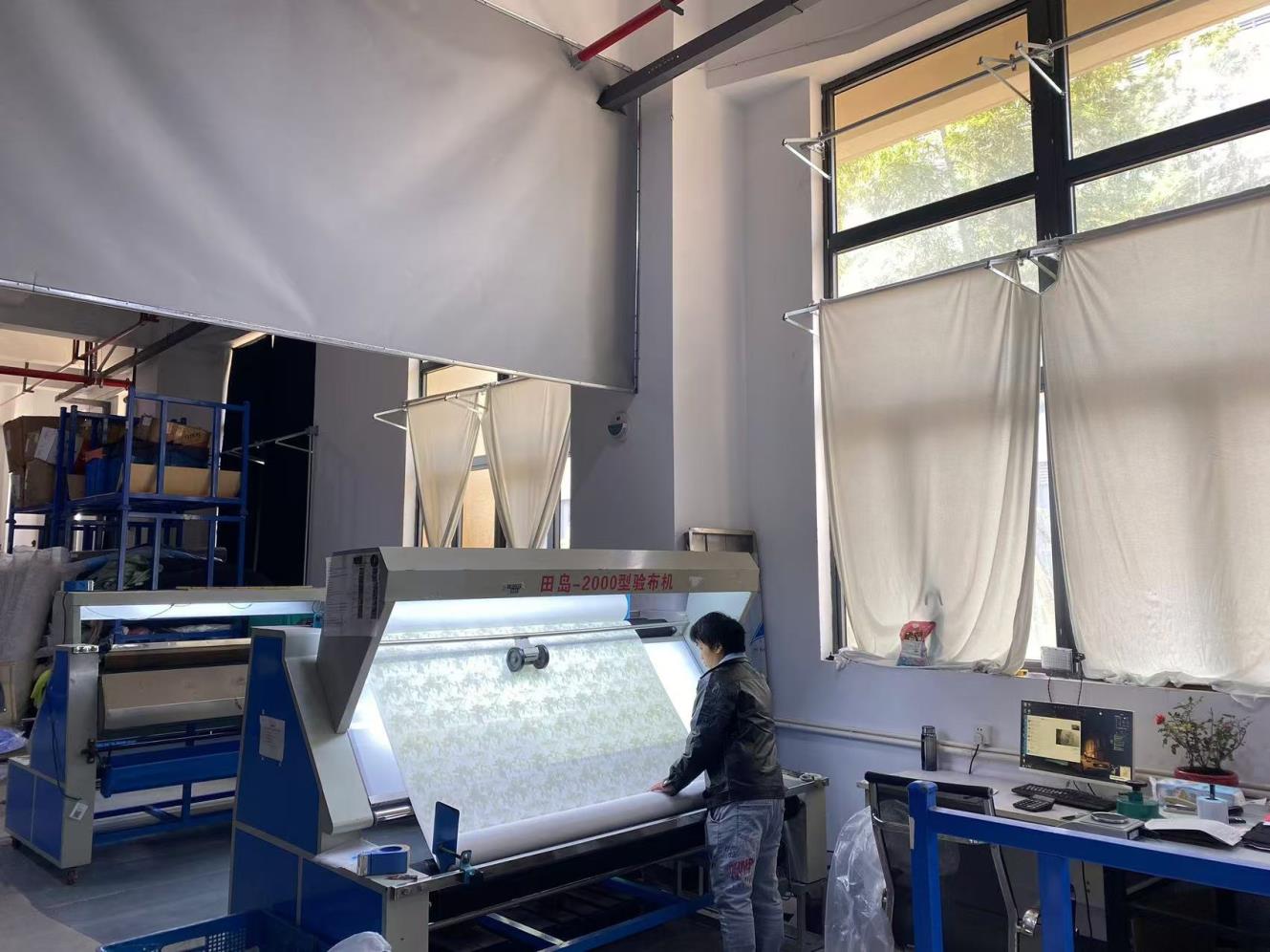
Compression vs. Lifestyle Activewear: Side-by-Side Comparison
The table below compares the two categories across the dimensions that actually change a sourcing brief. Shared manufacturing parameters are included at the bottom because, in practice, both categories run through the same order structure.
| Decision Dimension | Compression / Gym Line | Lifestyle Activewear Line |
|---|---|---|
| Core fabric system | Nylon-spandex and recycled polyester | Organic cotton, bamboo blend and recycled fibres |
| Primary performance features | Four-way stretch and moisture-wicking | Soft touch, breathability and eco-friendly dyes |
| Consumer use occasion | Training, running, gym and high-impact sport | Everyday wear, commuting and low-impact activity |
| Most relevant certifications | Oeko-Tex for chemical safety; GRS where recycled polyester is used; BSCI for social compliance | Oeko-Tex for chemical safety; BSCI for social compliance; GRS where recycled fibres are used |
| Fit tolerance | Tight — close fit amplifies deviation | Wider — relaxed silhouettes absorb variation |
| Repeat purchase driver | Consistent performance and shape retention | Colour refresh, fabric hand-feel and fit |
| Development focus at the factory | High-gauge knitting, bonded construction, recovery testing | Wider dye range, softer finishing, silhouette variety |
| Minimum order quantity (shared) | 500 pcs | 500 pcs |
| Typical lead time (shared) | 90 days | 90 days |
What Both Categories Share: The Manufacturing Baseline
Brand owners often overestimate how different the two production paths are. Once the fabric and finishing decisions are made, the order mechanics converge.
- Minimum order quantity: MOQ 500 pcs applies to both categories.
- Production lead time: a typical lead time of 90 days applies to both categories.
- Production modes: OEM and ODM services are available under the same structure for either line.
- Customisation scope: full packaging, branding, fabric, design, logo, label, size and colour.
- Quality control: in-line inspection and final random inspection conducted to AQL standard.
- After-sales support: sample support, quality assurance, order tracking and remote coordination.
This is the point where many brand owners discover that splitting a range across two suppliers is unnecessary. A factory that already operates both a fabric mill and a cut-and-sew floor can move a brand between categories without rebuilding the commercial relationship.
How Bellasports Supports Both Category Paths
Xiamen Bella Fitness Co., Ltd. is an OEM/ODM activewear manufacturer based in Xiamen, China, producing sports bras, leggings, jackets, hoodies, tennis and golf wear, and tops for brands across the United States, Europe, Australia, the Middle East, Southeast Asia and South America. The company was founded in 2017 and operates a 10,375 sqm facility with 221 employees, including a 27-person R&D team. All output is export-oriented.
Three capability points matter specifically to the compression-versus-lifestyle decision:
1. In-house fabric mills
Bellasports operates its own fabric mills, which means new fabric requirements can be supported as they arise rather than being constrained by an external mill's existing catalogue. Imported fabrics from Italy, Taiwan and other sources are also available. For a brand weighing a nylon-spandex compression line against a cotton or bamboo-blend lifestyle line, this removes the usual bottleneck of sourcing two unrelated fabric supply bases.
2. Bonded construction technology
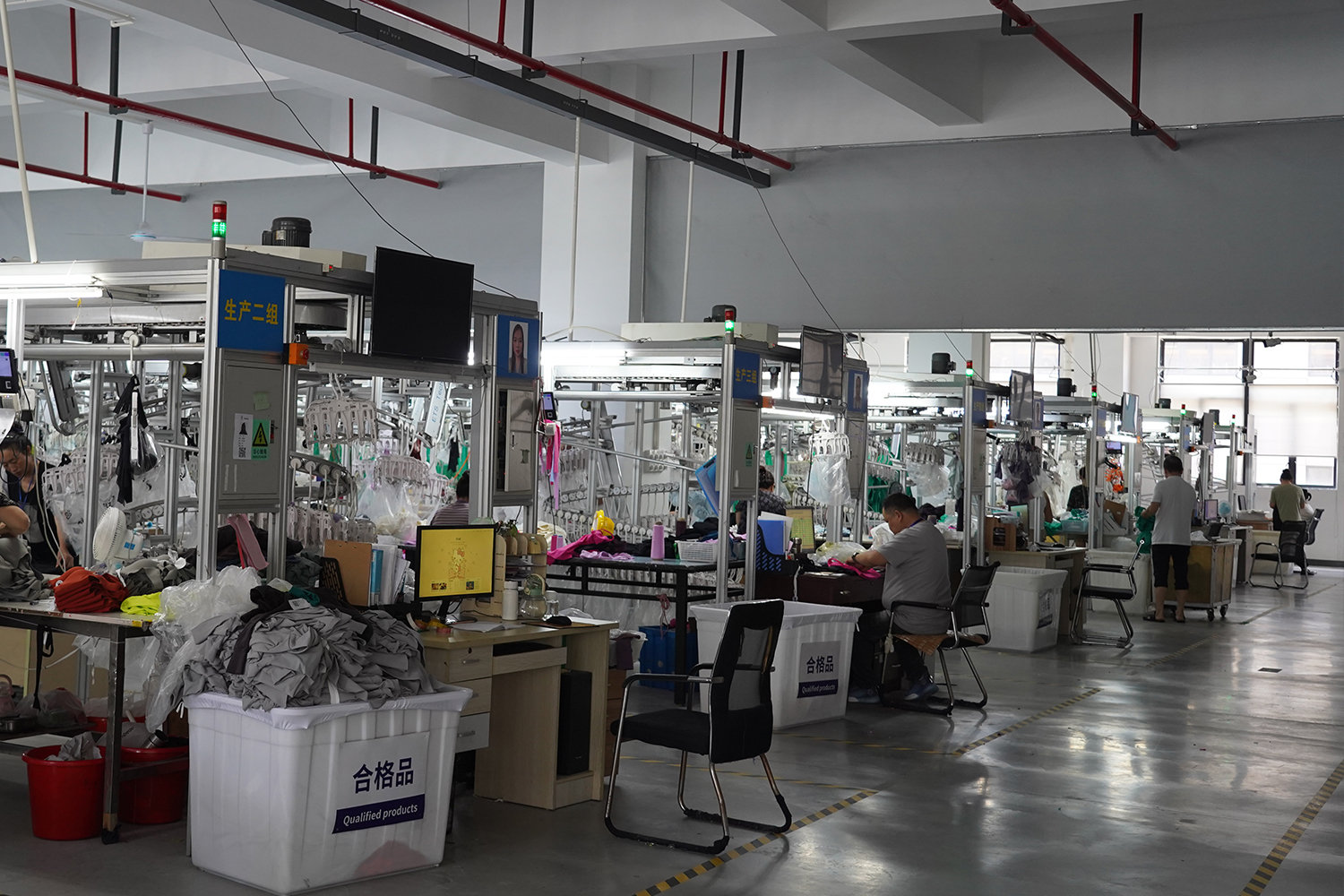
Bellasports runs bonded technology using imported machines and tapes. Bonding is particularly relevant to compression and technical products, where seam bulk and seam friction affect both fit and how the garment feels under load.
3. One-stop OEM/ODM with monthly capacity
Monthly capacity runs at 100,000+ pieces, varying by product type. Combined with OEM/ODM production, full customisation across packaging, branding, fabric, design, logo, label, size and colour, and AQL-standard quality control, this allows a brand to launch one category and add the second without changing partners.
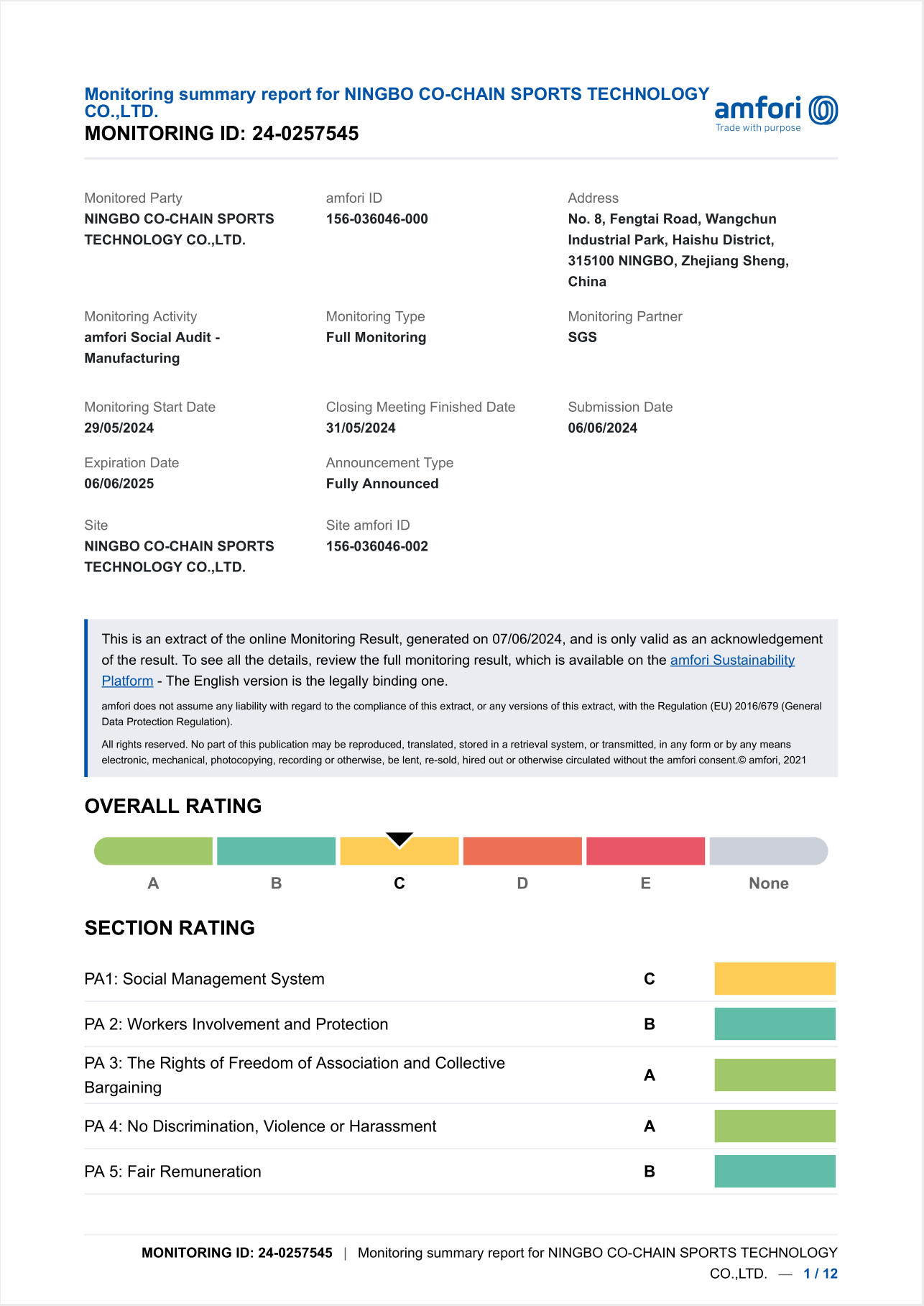
On compliance, Bellasports holds BSCI certification (amfori) covering factory social compliance and ethical production audit, Oeko-Tex Standard 100 (certificate HKC 23756, issued by TESTEX) covering all textile materials and final products including fabrics, threads and accessories, and Global Recycled Standard (GRS) certification covering recycled material sourcing, processing, labelling and supply chain traceability.
Step-by-Step: How to Choose Between the Two Categories
The decision is manageable if it is taken in sequence rather than as a single judgement call.
- Define the actual wearing occasion, not the mood board. Write down the three situations in which your target customer will wear the product. If those situations are dominated by training and high-impact activity, the category is compression. If they are dominated by daily wear with incidental movement, the category is lifestyle.
- Map the occasion to a fabric system. Training occasions point to nylon-spandex or recycled polyester with four-way stretch and moisture-wicking. Daily-wear occasions point to organic cotton, bamboo blend or recycled fibres with soft touch and breathability.
- Audit your certification requirements against the fabric choice. Oeko-Tex Standard 100 applies across textile materials and final products, so it is relevant to both lines. GRS becomes relevant if you are making recycled-content claims, which is most common in recycled polyester compression and recycled-fibre lifestyle. BSCI covers social compliance and is frequently requested by EU, US and Middle East retail buyers regardless of category.
- Test the brief with a sample before committing to a range. Fit tolerance, fabric hand-feel and recovery behaviour cannot be assessed from a spec sheet. Sampling is the cheapest way to find out whether your chosen category behaves the way your brand needs it to.
- Plan capacity by category, not by brand. Because MOQ is 500 pcs and lead time is 90 days for both lines, the real capacity question is which fabric system your factory needs to hold in stock and which finishing line your order will occupy.
Case Evidence: How Brands Across Three Markets Made the Call
EU and US — brand collaboration, custom activewear collection
An ongoing seasonal collaboration with brand partners in the USA and Europe centred on a custom activewear collection for retail sales, corporate merchandise and team uniforms. The highlights were a fast sampling turnaround of about 25 days, sustainable material integration and seamless supply chain coordination. The outcome was high sell-through rates, and recurring custom design projects that strengthened brand loyalty.
Australia — premium activewear brand expansion into performance
An Australian premium activewear brand partnered on a custom activewear collection for high-end retail and online sales, supporting a brand expansion into the performance category. The engagement involved joint fabric R&D, strict quality consistency across batches and an ESG-aligned production process. The client reported an 85% reorder rate, with fabric technology co-developed for enhanced performance.
Middle East — retail chain store-brand launch
A retail chain store partner in the UAE launched an in-store exclusive activewear line for store-brand sportswear sales and promotions. The programme delivered a fast time-to-market of 90 days from design to delivery, customised fabric development and consistent quality across bulk orders. The result was a successful launch of store-brand activewear and an established repeat ordering cycle.
Across all three cases, the category choice was made before the fabric brief was written — and in each case the deciding factor was the end consumer's wearing occasion, not the wholesale price point.
Frequently Asked Questions
Which certifications do compression and lifestyle activewear actually require?
Standard certifications for activewear factories include BSCI (social compliance), OEKO-TEX Standard 100 (chemical safety) and GRS (Global Recycled Standard). Oeko-Tex Standard 100 covers all textile materials and final products, including fabrics, threads and accessories, which matters for both categories because both sit against the skin. GRS governs recycled material sourcing, processing, labelling and supply chain traceability — relevant if your compression line uses recycled polyester or your lifestyle line uses recycled fibres. BSCI is an amfori social compliance audit covering full factory ethical production, and it is commonly requested by EU, US and Middle East retail buyers regardless of which category you launch.
Can one OEM/ODM manufacturer produce both compression and lifestyle activewear?
Yes, provided the factory controls fabric development as well as cut-and-sew. Compression products need high-gauge knitting and reliable elastic recovery; lifestyle products need softer finishing and a wider dye range. A manufacturer with its own fabric mills can support new fabric requirements as they arise instead of being constrained by an external mill's existing catalogue. Bellasports operates in-house fabric mills alongside its production floor, uses imported fabrics from Italy and Taiwan, and runs bonded construction with imported machines and tapes — a combination that covers both the technical and the comfort side of an activewear range under one OEM/ODM relationship.
What are the minimum order quantity and payment terms?
MOQ is 500 pcs. Delivery terms include FOB, DDP and CIF. Acceptance criteria is pre-shipment inspection, and payment terms are 30% deposit with 70% before shipment. These commercial terms apply across production modes, so the category decision does not change the order structure.
How long does sampling take before a range is confirmed?
In the USA and EU brand collaboration case, sampling turnaround was approximately 25 days. This is the stage where fit tolerance, fabric hand-feel and recovery behaviour are validated — the three variables that most often determine whether a compression brief or a lifestyle brief will hold up in bulk production.
What is the typical lead time from design to delivery?
Production lead time is typically 90 days. In the Middle East retail chain case, the partner achieved a 90-day time-to-market from design to delivery for a store-brand activewear line, followed by an established repeat ordering cycle. To evaluate which category fits your next growth phase against these parameters, send your product brief to Bellasports or email sales1@bellasports.cn — a sample request is the fastest way to test whether compression or lifestyle is the right build for your brand.
Conclusion: Choose the Category by Wearing Occasion, Then Choose the Partner
Compression and lifestyle activewear are not two versions of the same product. They are two different answers to two different consumer questions, and the fabric system, performance features and certification emphasis follow from that difference.
Choose compression if your customers buy for training outcomes and your brand can stand behind a performance claim. Choose lifestyle if your customers buy for daily wearability and your growth depends on colour, hand-feel and silhouette refresh. Both are viable — and both are supported by the same order structure: MOQ 500 pcs, 90-day lead time, OEM/ODM customisation across packaging, branding, fabric, design, logo, label, size and colour, with AQL-standard quality control.
The variable that changes most between the two paths is not the factory. It is the brief you write before you approach one. Get the category right, and the manufacturing decision becomes straightforward.
Ready to Test the Category Against Real Samples?
Bellasports produces compression, lifestyle and technical activewear under one roof — in-house fabric mills, bonded construction, 100,000+ pcs monthly capacity, and BSCI, Oeko-Tex Standard 100 and GRS certification.
Send your category brief and target wearing occasion, and the team will return a sample plan and indicative quotation.
Have Questions or Need More Details?
Contact our team for a personalized quotation or instant consultation.
Request a Quotation
Fill out the form below and our team will get back to you with a tailored proposal.
WhatsApp Direct Chat
Prefer to chat in real-time? Message us on WhatsApp for instant assistance & quick answers.
- Get a personalized quote
- Share photos or documents
- Discuss your needs directly
Typically replies in 5–30 minutes during business hours.