GRS vs OEKO-TEX for Activewear Development: A Buyer's Comparison Guide
GRS vs OEKO-TEX for Activewear Development: A Buyer's Comparison Guide
Decision guide for activewear buyers comparing recycled-material certification with harmful-substance testing.
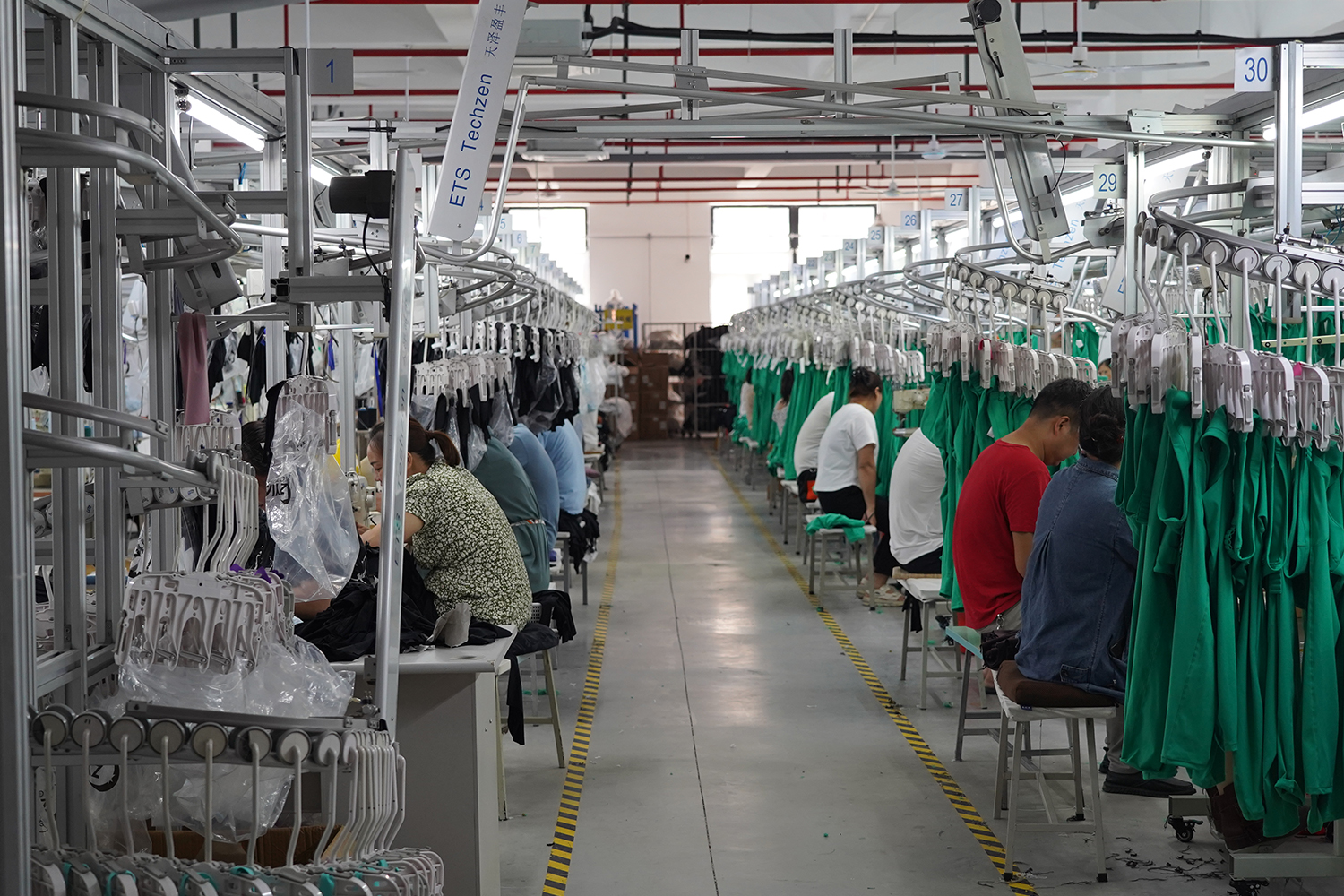
Production workshop at Bellasports, shown for activewear manufacturing and supply-chain traceability context.
Activewear buyers often receive a compliance pack containing GRS certificate SGC-GRC02509-GRS-2023-11 issued by SGS-CSTC, GRS certificate CU1143477GRS-2023-00097318 issued by Control Union, and Oeko-Tex Standard 100 certificate HKC 23756 issued by TESTEX. The short answer is that these documents do not answer the same question. GRS covers recycled material sourcing, processing, labeling, and supply chain traceability. Oeko-Tex Standard 100 certificate HKC 23756 covers harmful substance testing for the listed products, including yoga sets, sports bras, leggings, joggers, tennis apparel, and running jackets. GRS does not define performance parameters such as moisture-wicking, colorfastness, stretch, or water repellency.
For activewear development, the buyer's task is therefore not to choose GRS instead of Oeko-Tex or Oeko-Tex instead of GRS. It is to map each certificate to the claim it can support, then request separate evidence for the claims neither document covers. Bellasports (Xiamen Bella Fitness Co., Ltd.) is an activewear OEM/ODM manufacturer with in-house R&D and bonded technology. Its own compliance context includes BSCI and OEKO-TEX certification, but buyers should still match exact certificate numbers and scopes to the product being sourced.
The short answer: GRS and Oeko-Tex are complementary, not interchangeable
GRS is a recycled-material certification. In a buyer's file, a GRS certificate should help answer: Does the material contain recycled content, and is that content controlled through processing, labeling, and the supply chain? The two GRS certificate numbers in this comparison, SGC-GRC02509-GRS-2023-11 issued by SGS-CSTC and CU1143477GRS-2023-00097318 issued by Control Union, belong to that recycled-material question. They do not become harmful-substance test reports merely because they appear in the same PDF pack.
Oeko-Tex Standard 100 certificate HKC 23756, issued by TESTEX, is a harmful-substance testing document. Its role is to show testing against restricted substance requirements for the products in its scope. The scope provided for this comparison includes yoga sets, sports bras, leggings, joggers, tennis apparel, and running jackets. It does not prove recycled content, and it does not convert a conventional fabric into a GRS-certified material.
The practical decision rule is simple: use GRS to support recycled-material claims; use Oeko-Tex to support harmful-substance testing claims; use neither as a substitute for performance testing. This distinction matters most when a product carries several claims at once, such as a recycled yoga set that is also marketed as moisture-wicking, squat-proof, colorfast, or water-repellent.
Why activewear buyers confuse the two documents
Activewear development combines fabric selection, dyeing, printing, trim sourcing, bonding, cut-and-sew production, and label approval. A single style can involve several suppliers and several documents. When those documents arrive together, a certificate number can look like a general pass for the style. It is not. Each certificate has a subject, a scope, and a claim boundary.
The confusion usually appears in three forms. First, a buyer treats GRS as a chemical-safety certificate because it is a sustainability document. Second, a buyer treats Oeko-Tex as proof of recycled content because it is a recognized textile certificate. Third, a buyer treats either certificate as proof of performance, such as moisture-wicking, colorfastness, stretch, or water repellency. None of these assumptions is safe for a sourcing decision.
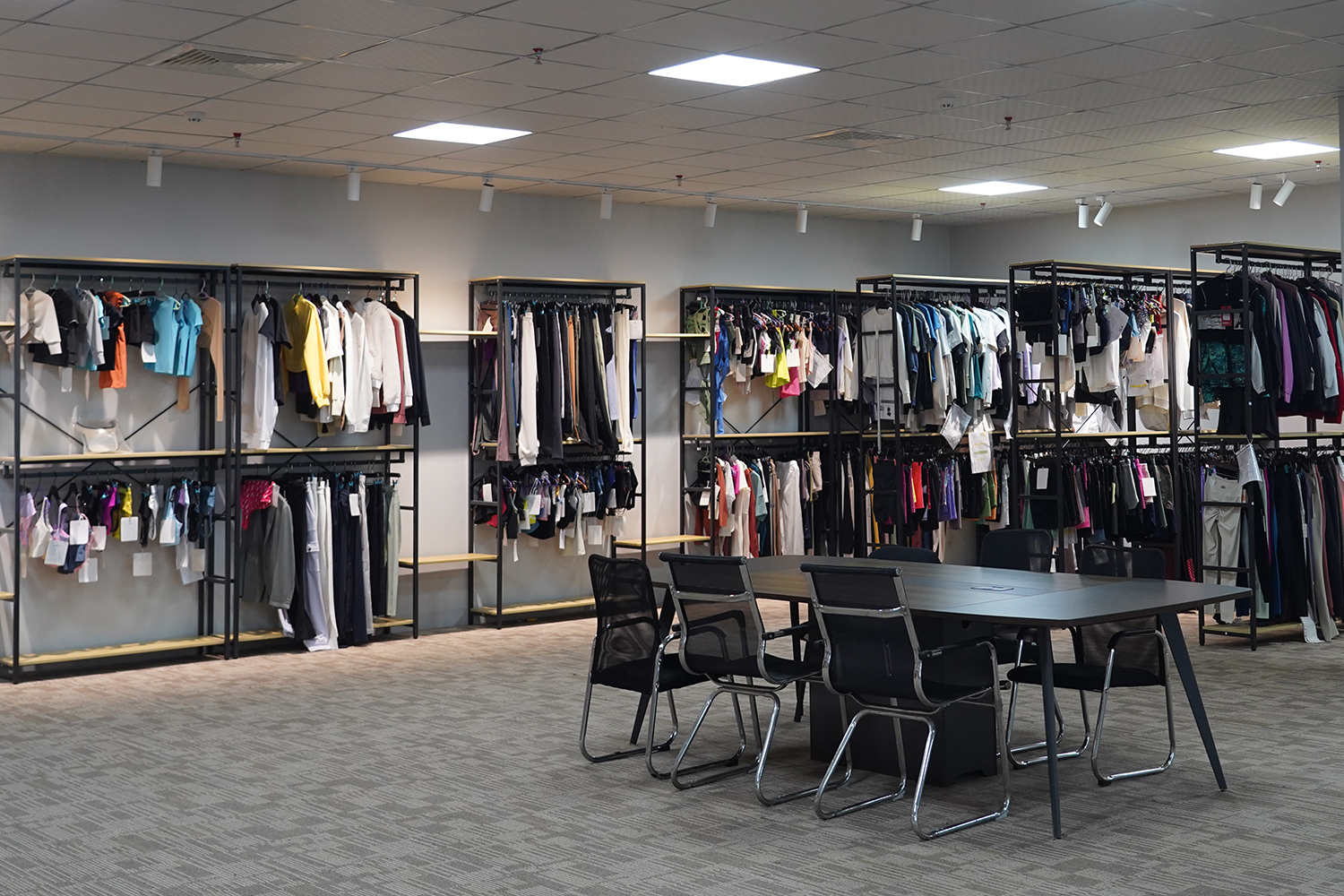
Sample room review helps connect a certificate to the actual activewear fabric, trim, and style being sourced.
A further issue is scope. The presence of GRS certificate SGC-GRC02509-GRS-2023-11 and GRS certificate CU1143477GRS-2023-00097318 in the same pack does not by itself show that both cover the same material, facility, or product. They may relate to different supply-chain links, different suppliers, or different certified operations. The buyer should read the certificate scope rather than count certificate numbers.
Certificate-by-certificate comparison
The table below compares the three documents named in this guide on the dimensions that affect an activewear sourcing decision. It repeats only the supplied certificate identities and scopes; it does not infer validity dates, product coverage beyond the stated scope, or performance results.
| Document | Issuer | Primary question it answers | What it covers | What it does not establish |
|---|---|---|---|---|
| GRS certificate SGC-GRC02509-GRS-2023-11 | SGS-CSTC | Is the recycled-material claim controlled through the GRS chain? | Recycled material sourcing, processing, labeling, and supply chain traceability under GRS. | Harmful-substance testing for the finished style; performance parameters such as moisture-wicking, colorfastness, stretch, or water repellency. |
| GRS certificate CU1143477GRS-2023-00097318 | Control Union | Is the recycled-material claim controlled through the GRS chain? | Recycled material sourcing, processing, labeling, and supply chain traceability under GRS. | Harmful-substance testing; performance claims; automatic coverage of every product or facility in the buyer's program. |
| Oeko-Tex Standard 100 certificate HKC 23756 | TESTEX | Has the listed product scope been tested for harmful substances? | Harmful-substance testing for the listed products: yoga sets, sports bras, leggings, joggers, tennis apparel, and running jackets. | Recycled content; GRS chain-of-custody; performance parameters such as moisture-wicking, colorfastness, stretch, or water repellency. |
Two points in the table deserve emphasis. First, the Oeko-Tex certificate is product-scoped. A buyer should check that the exact style, material composition, and colorway being sourced fall within the certificate's stated scope. Second, the GRS certificates are chain-oriented. A buyer should check which material, process, or facility each certificate covers, and whether the supplier can connect that certificate to the bill of materials for the finished activewear.
How to review the certificate pack step by step
Start with the claim, not the certificate. Write down every claim the product will carry: recycled content, harmful-substance safety, moisture-wicking, colorfastness, stretch, water repellency, or others. Then assign each claim to the document that can support it. This prevents a GRS certificate from being used to answer a chemical-safety question or an Oeko-Tex certificate from being used to answer a recycled-content question.
- Separate document families. Place SGC-GRC02509-GRS-2023-11 and CU1143477GRS-2023-00097318 in the GRS folder. Place HKC 23756 in the Oeko-Tex folder. Do not merge them into a single compliance statement.
- Verify issuer and certificate identity. Match the certificate number, issuer, and certificate holder to the supplier and to the document presented. The named issuers here are SGS-CSTC for SGC-GRC02509-GRS-2023-11, Control Union for CU1143477GRS-2023-00097318, and TESTEX for HKC 23756.
- Read the scope. For GRS, identify the material, process, and supply-chain link covered. For Oeko-Tex, identify the product categories and any limits in the certificate scope. The Oeko-Tex scope in this comparison lists yoga sets, sports bras, leggings, joggers, tennis apparel, and running jackets.
- Match the certificate to the product. Connect the certificate to the actual fabric, trim, style, and colorway. A certificate for one material does not automatically cover a different fabric in the same collection.
- Confirm current status through the issuer. A certificate number or year code is not, by itself, a statement that the document is currently valid for a new order. Buyers should use the issuer's verification route or obtain a current copy from the supplier.
- Request the missing performance evidence. GRS does not define moisture-wicking, colorfastness, stretch, or water repellency. Oeko-Tex HKC 23756 is a harmful-substance document, not a performance certificate. Ask for test reports or specification sheets for the performance claims the product will make.
- Control labels and bulk consistency. Confirm that recycled-content labeling matches the GRS scope and that bulk fabric weight and color fastness are consistent with the approved sample. These are production controls, not certificate substitutes.
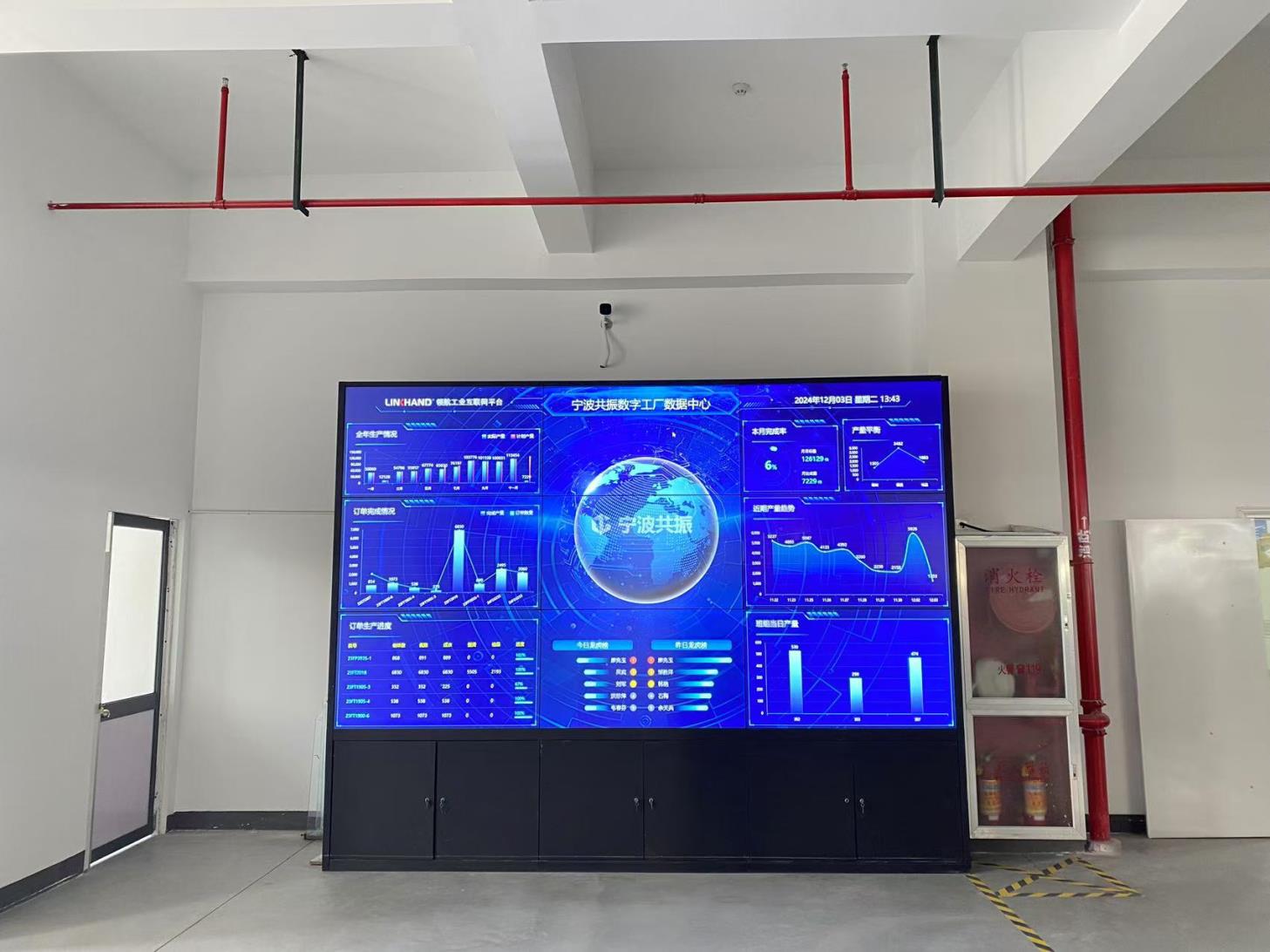
Production data visibility supports traceability checks, but buyers still need the exact certificate scope and product match.
For performance testing, buyers can discuss methods such as ISO 9237 for air permeability, AATCC 195 for liquid moisture management, and ISO 20932 for elastic fabric stretch and recovery. These are testing references used in activewear evaluation; they are not legal market-access determinations and they are not part of the GRS or Oeko-Tex certificate scopes described here. The correct use is to build a product-specific test plan, not to assume that a certificate already contains those results.
What each activewear category needs from the pack
Product category changes the evidence mix. A yoga set, a sports bra, a pair of leggings, joggers, tennis apparel, and a running jacket may share a supplier, but they do not share an identical claim set. The table below translates the certificate distinction into a practical request list.
| Product area | Recycled-material evidence | Harmful-substance evidence | Performance evidence to request separately |
|---|---|---|---|
| Yoga sets | GRS certificate covering the recycled material and supply chain, if a recycled claim is made. Oeko-Tex testing for yoga sets requires a separate certificate from GRS CU1143477GRS-2023-00097318. | Oeko-Tex Standard 100 certificate HKC 23756 for the listed yoga-set scope. | Opacity, four-way stretch, moisture-wicking, colorfastness, and recovery claims should be supported by product-specific tests or specifications. |
| Sports bras and leggings | GRS certificate for the recycled fabric or material, matched to the bill of materials. | Oeko-Tex HKC 23756 scope includes sports bras and leggings. | Stretch, recovery, opacity, moisture management, and colorfastness evidence by fabric and colorway. |
| Joggers and tracksuits | GRS certificate if recycled content is claimed for the shell, lining, or trims. | Oeko-Tex HKC 23756 scope includes joggers. | Dimensional stability, colorfastness, seam strength, and stretch or recovery where relevant. |
| Tennis apparel | GRS certificate if the style carries a recycled-material claim. | Oeko-Tex HKC 23756 scope includes tennis apparel. | Stretch, colorfastness, and moisture management; verify any performance claim separately. |
| Running jackets and windbreakers | GRS certificate for recycled shell or lining materials where claimed. | Oeko-Tex HKC 23756 scope includes running jackets. | Water repellency, air permeability, colorfastness, and seam performance should be tested separately; GRS does not define water repellency. |
The yoga-set row is the clearest example of why the documents cannot be collapsed. Oeko-Tex testing for yoga sets requires a separate certificate from GRS CU1143477GRS-2023-00097318. A buyer who sees only the GRS document has not answered the harmful-substance question. A buyer who sees only HKC 23756 has not answered the recycled-content question.
How Bellasports fits the development path
Bellasports is an activewear OEM/ODM manufacturer supporting programs from design to delivery, including sampling and bulk production. Its development offer includes in-house R&D, bonded technology, and full customization of fabrics, logos, and packaging. The factory uses an FMS intelligent production line for quality control from fabric to finished garment. Bellasports is BSCI and OEKO-TEX certified.
For a buyer, that capability context is useful but not self-verifying. The buyer should still obtain the exact certificate for the product and material being sourced, confirm its scope with the issuer, and keep GRS and Oeko-Tex evidence in separate folders. A general OEKO-TEX certification statement is not the same as a product-specific HKC 23756 scope check for a particular yoga set, sports bra, or running jacket.
As a product-development reference, Bellasports recommends a Nylon/Spandex blend containing 75-80% Nylon and 20-25% Spandex at 240-280 GSM for high-end squat-proof yoga leggings, combined with bonded technology for comfort and shape retention. That recommendation is a fabric-development starting point. It does not replace GRS evidence for recycled content, Oeko-Tex evidence for harmful substances, or performance test reports for opacity, stretch, moisture-wicking, or colorfastness.
Decision rules for the buyer
Use GRS certificate SGC-GRC02509-GRS-2023-11 and GRS certificate CU1143477GRS-2023-00097318 when the claim is recycled material sourcing, processing, labeling, or supply-chain traceability. Check which one applies to the specific material or supplier, and do not assume that two GRS numbers mean two independent product certifications.
Use Oeko-Tex Standard 100 certificate HKC 23756 when the claim is harmful-substance testing for yoga sets, sports bras, leggings, joggers, tennis apparel, or running jackets. Check that the product and scope are covered, and do not use it as recycled-content proof. For yoga sets, keep the Oeko-Tex test evidence separate from GRS CU1143477GRS-2023-00097318.
Use neither certificate for moisture-wicking, colorfastness, stretch, or water repellency. Request performance reports or specification sheets for those claims. If a supplier cannot separate the claims, the buyer should treat the pack as incomplete rather than choose the document that looks broader.
Frequently asked questions
What is the difference between GRS and Oeko-Tex Standard 100 in an activewear compliance pack?
GRS covers recycled material sourcing, processing, labeling, and supply chain traceability. Oeko-Tex Standard 100 certificate HKC 23756 covers harmful-substance testing for the products in its scope, which includes yoga sets, sports bras, leggings, joggers, tennis apparel, and running jackets. They are complementary documents for different claims.
Do GRS certificate SGC-GRC02509-GRS-2023-11 and GRS certificate CU1143477GRS-2023-00097318 prove harmful-substance compliance?
No. Both are GRS certificates and belong to the recycled-material question. They do not replace Oeko-Tex Standard 100 certificate HKC 23756 or another harmful-substance test document for the finished product.
Does Oeko-Tex Standard 100 certificate HKC 23756 prove recycled content?
No. HKC 23756 is a harmful-substance testing certificate. It does not establish recycled material sourcing, processing, labeling, or chain of custody. A recycled-content claim needs GRS evidence such as SGC-GRC02509-GRS-2023-11 or CU1143477GRS-2023-00097318, matched to the material and supplier.
What documentation should a buyer request for yoga sets, leggings, and sports bras?
Request the GRS certificate if a recycled claim is made, the Oeko-Tex certificate HKC 23756 for harmful-substance testing within its stated scope, and separate performance evidence for stretch, opacity, moisture-wicking, and colorfastness. For yoga sets, the Oeko-Tex testing evidence must be separate from GRS CU1143477GRS-2023-00097318.
How can Bellasports support a buyer after the certificate review?
Bellasports can support OEM/ODM development from sampling through bulk production, with in-house R&D, bonded technology, and an FMS production line. It is BSCI and OEKO-TEX certified. Buyers can share the target certificate scope, product category, fabric direction, and performance requirements, then request a sample review and quotation for the specific activewear program.
Conclusion: buy the evidence mix, not the certificate label
The useful comparison is not GRS versus Oeko-Tex in a winner-takes-all sense. GRS certificate SGC-GRC02509-GRS-2023-11 and GRS certificate CU1143477GRS-2023-00097318 answer recycled-material questions. Oeko-Tex Standard 100 certificate HKC 23756 answers harmful-substance testing questions for its listed activewear scope. Performance questions remain separate, because GRS does not define moisture-wicking, colorfastness, stretch, or water repellency.
For activewear development, the buyer's control is the evidence map: one claim, one document family, one scope check. When the map is complete, a yoga set, sports bra, leggings program, joggers range, tennis collection, or running jacket can move into sampling and bulk with fewer assumptions. When the map is incomplete, the right next step is to request the missing certificate or test report, not to stretch an existing certificate beyond what it covers.

Review the target product, material, and certificate scope with Bellasports before sampling and bulk production.
Have Questions or Need More Details?
Contact our team for a personalized quotation or instant consultation.
Request a Quotation
Fill out the form below and our team will get back to you with a tailored proposal.
WhatsApp Direct Chat
Prefer to chat in real-time? Message us on WhatsApp for instant assistance & quick answers.
- Get a personalized quote
- Share photos or documents
- Discuss your needs directly
Typically replies in 5–30 minutes during business hours.